Signed, Sealed, Transmitted: The Offices Where Fax Machines Never Became a Punchline
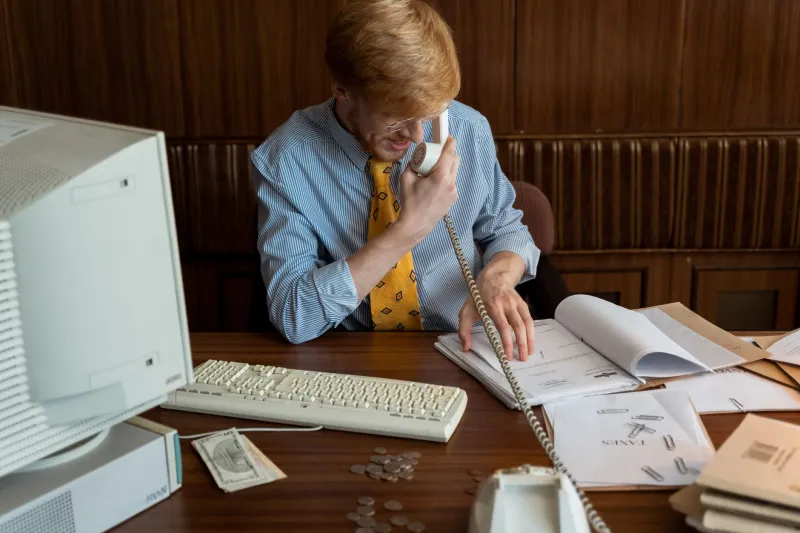
Somewhere in a county courthouse in rural Ohio, a machine about the size of a microwave oven hums to life, pulls a sheet of paper through its rollers, and spits out a document that carries the same legal weight as anything filed by hand. Nobody in that office thinks this is weird. Nobody is embarrassed by it. The fax machine is, in their words, simply how things get done.
If you spent any time on a BBS in the early nineties, you probably remember the first moment someone told you that fax was already obsolete. It was always said with the kind of certainty that the internet crowd reserved for technologies it had decided to bury. And yet here we are, decades later, and the fax machine is still breathing — not as a curiosity, not as a museum piece, but as genuine, load-bearing infrastructure in some of the most critical industries in the country.
So what happened? How did a technology invented before most of the internet's foundational protocols even existed outlast so many of its supposed replacements?
The Industries That Never Logged Off
Ask around and the same sectors keep coming up: healthcare, law, real estate, and government. In each of these worlds, fax machines didn't survive because of nostalgia. They survived because the alternatives introduced problems that nobody was fully prepared to solve.
Healthcare is probably the most striking example. Under HIPAA, covered entities face serious liability for improperly transmitted patient data. Email, for all its convenience, carries real risks — misconfigured servers, misdirected messages, unencrypted attachments forwarded to the wrong inbox. A fax, by contrast, creates a physical paper trail. There's a sent confirmation, a received confirmation, and a hard copy on both ends. For a clinic transmitting a patient's medication history to a specialist across town, that paper trail isn't bureaucratic overhead. It's protection.
Legal offices tell a similar story. Court filings, signed agreements, and time-sensitive documents often move by fax specifically because the technology produces a timestamped record that's harder to tamper with than a forwarded email chain. Several states still formally recognize fax transmission as a valid method of filing documents with the courts — a recognition that has no equivalent for, say, a PDF dropped into a shared Google Drive.
The Sysadmin Who Will Fight You About This
Talk to the people who actually manage office infrastructure and you'll find a quiet but passionate contingent who will defend fax with genuine conviction.
One IT administrator at a mid-sized medical group in the Pacific Northwest — who asked to remain anonymous because, in his words, "people already think I'm old" — put it plainly: "Email is a postcard. Anyone who handles it along the way can read it. A fax is more like a phone call — it goes point to point, and if someone intercepts it, they needed physical access to the line."
That's not a perfect analogy, and he knows it. Modern fax-over-IP systems introduce some of the same vulnerabilities that traditional analog lines avoided. But his broader point stands: the threat model for fax is fundamentally different from the threat model for email. Phishing attacks, credential theft, malicious attachments — none of these work against a dedicated fax line. You can't social-engineer a thermal paper tray.
Another sysadmin, this one managing infrastructure for a chain of title companies in the Southeast, described fax as the technology his clients trust even when they don't trust him. "They don't know what happens to an email after it leaves their outbox. With a fax, they fed the paper in themselves. They watched it go. That's a kind of confidence you can't replicate with a progress bar."
The Regulatory Treadmill
Part of what keeps fax alive is something less technical and more bureaucratic: regulations written when fax was the cutting edge and never fully updated to account for what came after.
The federal government is a notable offender here. The Social Security Administration, the IRS, and various branches of the Department of Veterans Affairs have all maintained fax-based workflows well into the era of cloud storage and mobile apps. Some of this is inertia. Some of it is the genuine difficulty of updating compliance frameworks that were written with specific technologies in mind. Either way, the effect is the same: agencies that want to interface with these institutions have to meet them where they are, which means keeping the fax machine on.
The VA, in particular, became something of a cautionary tale in tech circles during the 2010s when reports surfaced about paper-based records systems contributing to patient care delays. Efforts to modernize those systems have been ongoing and expensive, and as of the mid-2020s, fax remains part of the workflow in more VA facilities than most people would guess.
Cultural Gravity and the Cost of Change
Beyond the regulatory and security arguments, there's something else keeping fax machines plugged in — something harder to quantify but just as real. Call it institutional memory, or call it the cost of change.
Every office that has operated on fax-based workflows for twenty or thirty years has built processes around those workflows. Staff know how to use them. Vendors know how to send to them. The muscle memory is baked in. Replacing that infrastructure means retraining people, updating vendor agreements, potentially renegotiating contracts, and absorbing the risk of transition errors during a period when documents still need to move.
For a small law firm or a county health department running on a tight budget, the calculus often comes out in favor of the machine that's already working. The fax isn't broken. Why fix it?
This is a logic that anyone who spent time in the BBS world will recognize immediately. It's the same reason certain sysops kept running aging hardware long after faster options were available. The system worked. The users knew it. The risk of migration was real, and the upside was abstract.
The Machine at the End of the Hall
Fax will eventually go. The pressures are real — younger workers who've never sent one, vendors who charge extra to support legacy systems, and a slow but steady regulatory modernization effort that's chipping away at the statutory foundations that kept fax mandatory in so many contexts.
But "eventually" is doing a lot of work in that sentence. Right now, today, millions of fax transmissions are moving across the United States. Prescriptions, property deeds, court filings, insurance authorizations — documents that matter, sent by people who made a deliberate choice about how to send them.
The fax machine didn't survive because nobody thought to replace it. It survived because the people who depended on it looked at the alternatives and decided the trade-offs weren't worth it. That's not ignorance. That's a judgment call. And in the industries where it keeps getting made, it keeps coming out the same way.
The machine at the end of the hall isn't a relic. It's a decision.