Baud Rate Bragging: How Modem Speeds Became the Horsepower Wars of the Dial-Up Generation
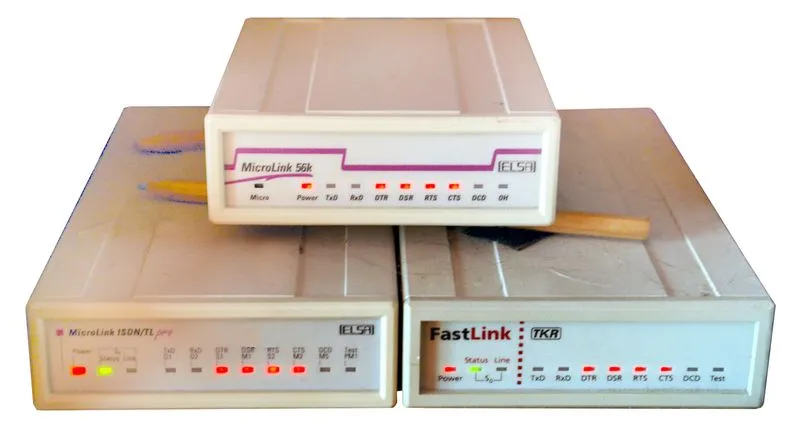
Photo: vintage 1990s modem hardware dial-up connection speed, via backintimetoday.com
There's a particular kind of pride that only makes sense if you lived it. It wasn't about your car, your sneakers, or your GPA. It was about what number flashed in the corner of your screen after that familiar screech-and-hiss symphony finished playing. 28.8. 33.6. 56K. Those weren't just connection speeds — they were social currency, and a whole generation of early internet users spent real emotional energy chasing them.
The modem codec wars of the late 1990s don't get talked about much anymore, but they shaped how millions of Americans experienced the internet at its most formative moment. And the psychology behind it — the obsessive tracking, the marketing anxiety, the tribal allegiances to competing standards — says a lot about who we were online before broadband smoothed everything out.
The Numbers Game Nobody Asked For
Let's back up. By the mid-1990s, the 28.8 Kbps modem had become the de facto entry point for serious home internet access. It was fast enough to load a basic webpage without making you question your life choices, and slow enough that you absolutely noticed when your neighbor claimed to have a 33.6. That 5,000 baud difference shouldn't have mattered much in practice. But it did. Oh, it did.
The jump to 56K is where things got genuinely complicated — and genuinely weird. Two competing standards, X2 (pushed by US Robotics) and K56flex (backed by Rockwell and Lucent), hit the market simultaneously in 1997 and immediately split the consumer base. ISPs had to pick a side, users had to pick a side, and nobody was fully compatible with everybody else. If your ISP ran K56flex and you bought an X2 modem, you were negotiating down to 33.6 whether you liked it or not. The marketing didn't mention that part.
This is where the status game got its teeth. Buying a modem was no longer just a purchase — it was a bet. You had to research your ISP, cross-reference hardware, and hope the ITU would ratify a unified standard before your equipment became a paperweight. When V.90 finally arrived in 1998 and gave everyone a common language, it felt less like a technical resolution and more like a ceasefire.
The 56K Lie You Paid Full Price For
Here's the part the box never explained clearly: 56K wasn't really 56K. FCC regulations capped upload speeds at 53.3 Kbps, and real-world line conditions — noise, distance from the central office, the quality of your phone wiring — meant most people connected somewhere between 40 and 50 Kbps on a good day. A genuinely clean 53K connection was something you bragged about. You'd screenshot the connection dialog and show people.
V.92, which rolled out around 2000, tried to sweeten the deal with a couple of genuinely useful features: faster upstream speeds and something called "modem on hold," which let you pause your internet connection to take a phone call and then resume without a full reconnect. For households with one phone line — which was most of them — this was legitimately useful. But V.92 also arrived right as broadband was starting to creep into suburban America, so it never quite got the cultural moment it deserved. It was the best version of a technology that was already on its way out.
Handshake Sequences and the Audiophile Nerds of Dial-Up
If you were deep in the culture, you didn't just track your connection speed. You listened for it. The handshake sequence — that layered chaos of tones that played out over roughly ten seconds between dialing and connecting — was actually a structured negotiation. Your modem and the server's modem were talking to each other, testing the line, agreeing on a protocol. Every distinct screech and warble meant something specific.
A subset of enthusiasts got genuinely good at reading these sounds the way a mechanic listens to an engine. They could tell from the handshake whether they were going to get a strong connection or a disappointing one. Online forums — BBSs, Usenet groups, early web message boards — hosted long threads where people described their handshake sequences in detail, troubleshooting each other's line quality like audiophiles comparing speaker setups.
This wasn't frivolous. For people running small websites, hosting files, or playing early online games, connection quality had real consequences. A 42K connection during a MUD session was the difference between a playable experience and getting killed because your commands lagged out. Stakes were real, even if they seem quaint now.
The Generational Divide at 28.8
The speed gap created actual social friction between age groups, and not just between parents and kids. Within the teenage internet-user cohort itself, there was a clear hierarchy. Kids whose parents had sprung for a 56K modem had access to a meaningfully different internet than those stuck on 28.8 — not just faster, but qualitatively different. Certain sites, certain downloads, certain online games were essentially inaccessible at lower speeds. Shockwave animations that loaded in thirty seconds at 56K took three minutes at 28.8, if they loaded at all.
School conversations reflected this. "What speed do you have?" was a genuine question people asked each other, with the same casual weight as "What kind of car does your family drive?" The answer positioned you. It wasn't polite, but it was real.
Adults, for their part, were often completely baffled by why any of this mattered. To a parent who used the internet primarily for email, the difference between 28.8 and 56K was invisible. To a fifteen-year-old trying to download MP3s before anyone got home, it was everything.
What We Were Actually Chasing
Looking back, the modem speed obsession was about more than bandwidth. It was about access — to a version of the internet that felt like it was opening up rather than closing off. Every speed bump felt like a door opening wider. 14.4 to 28.8 was a revelation. 28.8 to 56K felt like the future arriving ahead of schedule.
And then broadband came, and the numbers got so large they stopped meaning anything personal. Nobody brags about their 940 Mbps fiber connection with the same intimacy that a 1998 teenager bragged about their 52K handshake. The speeds got faster, but the feeling got flatter.
The modem codec wars were chaotic and consumer-hostile and full of half-truths on the box. But they were also a moment when the technical infrastructure of the internet was legible to regular people — when you could hear the negotiation happening, follow the standards debate in a magazine, and feel like you understood the thing you were using. That's rarer than it sounds.