Packets Over the Air: Ham Radio Operators Are Running Bulletin Boards Without a Single Internet Connection

Somewhere in a garage in rural Colorado, a man named Dennis is reading new messages on a bulletin board. He's checking for local weather reports, a swap post from someone two counties over offering a working oscilloscope, and a thread about antenna tuning that's been active for three days. His computer is not connected to the internet. It has never been connected to the internet during any of this. The messages are arriving — slowly, deliberately — over VHF radio frequencies, bounced through a small network of relay nodes that other hobbyists have quietly bolted to rooftops and hilltops across the region.
Dennis is a licensed amateur radio operator, and what he's running is a packet radio BBS. And he is very much not alone.
The Part Most People Forgot About Ham Radio
When people think about ham radio, they usually picture someone in a headset talking to another someone across an ocean, or maybe emergency volunteers passing damage reports after a hurricane. What doesn't get talked about as often is the fact that amateur radio operators have been doing data communications — actual digital, text-based data — since the early 1980s.
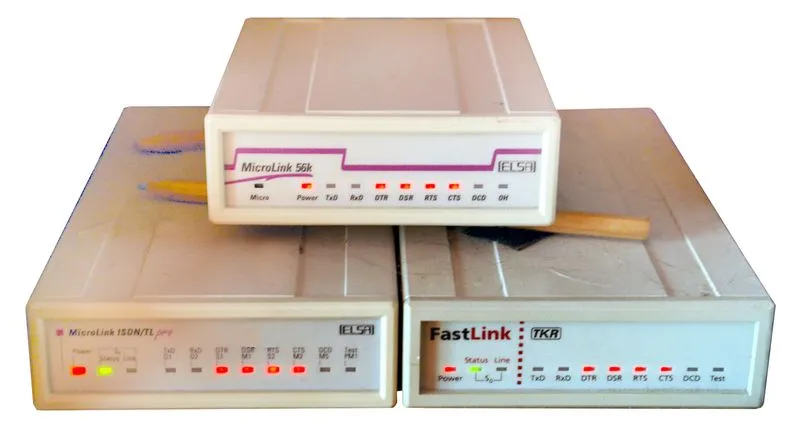
Packet radio, which encodes digital information into audio bursts transmitted over radio frequencies, gave ham operators a way to send text messages and files without any telephone infrastructure at all. By the late '80s and into the '90s, packet radio BBSs were a legitimate parallel network — slower than dial-up, stranger in its geography, but entirely self-contained. You needed a radio, a terminal node controller (basically a modem for radio), and a computer. No ISP. No phone bill. No Compuserve subscription.
Then the internet happened, and most of that world quietly folded up.
Except it didn't, entirely. And lately, it's been getting louder again.
Why Now?
Ask the people currently building or reviving packet radio BBS setups why they're doing it in 2024, and you'll get a few different answers, but they tend to cluster around the same core ideas.
One is resilience. The COVID years made a lot of people — not just preppers, but ordinary technically-minded folks — think harder about what communication looks like when centralized infrastructure fails. Fiber lines get cut. Cell towers go down. Cloud services have outages that take half the internet with them. A packet radio BBS, by contrast, depends on nothing except the nodes its own community has built and maintains. That's a different kind of reliability.
Another answer is simpler: it's genuinely interesting to build. The maker and DIY communities that have exploded over the last decade overlap heavily with amateur radio culture, and a lot of people who got into software-defined radio or ESP32 microcontrollers eventually found their way to packet. Building a working BBS node that communicates over radio frequencies scratches an engineering itch that setting up yet another Discord server just doesn't.
And then there's the nostalgia angle, which anyone reading NDS BBS probably doesn't need explained at length. Text-based systems, slow data rates, the feeling of a small community where everyone knows the handle of everyone else — that's not a bug in this ecosystem. It's a selling point.
What the Tech Actually Looks Like
Modern packet radio BBS setups are a hybrid of genuinely old hardware and surprisingly current software. The AX.25 protocol, which has been the standard for amateur packet radio since 1984, is still very much in use. It's not glamorous — maximum throughput on a standard VHF link tops out around 1200 or 9600 baud — but it works, and it works without any internet backbone.
On top of AX.25, operators run BBS software that would look recognizable to anyone who spent time on FidoNet or a dial-up board in the early '90s. Winlink, one of the most widely used systems, lets operators exchange email-formatted messages through a network of radio relay stations. Other groups run dedicated local BBS nodes using software like BPQ32, which supports multiple simultaneous users and handles message threading, file transfers, and even basic chat.
The terminal node controller — the hardware box that converts between audio tones and digital data — used to be an expensive specialty item. Now you can build a functional TNC for under thirty dollars using a Raspberry Pi and a cheap USB sound card, with open-source software handling the signal processing. That price drop has been a significant driver of new interest.
Some operators are pushing the technology further. There are experimental setups running at higher data rates using modified hardware and less congested frequency bands. A few groups are experimenting with mesh networking approaches that let packet nodes automatically route traffic around dead links — the same basic concept that made ARPANET resilient, now implemented in someone's backyard.
The Community Running It
The people active in packet radio BBS communities today are a mixed crowd. There are longtime ham operators who never really stopped — who kept their nodes running through the broadband era because it was there and it worked and a few people were still using it. There are younger makers who got licensed specifically to experiment with data modes. There are emergency communications volunteers who view packet infrastructure as a serious preparedness resource and maintain nodes accordingly.
What they share is a comfort with slow, deliberate communication and a certain appreciation for systems you can actually understand end to end. On a packet radio BBS, there's no algorithm deciding what you see. There's no engagement optimization. There's no data center in Virginia somewhere making decisions about your content. There's a radio signal, a protocol from 1984, and whatever your neighbors decided to post this week.
For a lot of these operators, that simplicity is the whole point.
The Limits Are Part of the Deal
None of this is going to replace the internet. The throughput is too low, the geographic coverage too patchy, and the licensing requirements — you need an FCC amateur radio license to transmit — create a real barrier to casual participation. A packet radio BBS is not a mass medium.
But it was never trying to be. The original BBS wasn't a mass medium either. It was a local thing, a community thing, a system where the constraints of the technology shaped the culture that grew up around it. The low speed meant messages got written carefully. The local nature meant you actually knew, or could know, the people you were talking to. The technical barrier to entry meant the people who showed up were genuinely interested in being there.
Packet radio BBS culture has all of those same properties, and then some. The radio range limits create natural geographic communities. The baud rate keeps things text-focused. The licensing requirement means every user has at least cleared a basic technical hurdle.
Dennis in Colorado probably isn't going to convince his neighbors to get their Technician licenses just to read his swap posts. But that's okay. The people who find their way to this corner of the hobby tend to stay, and they tend to build things, and the network — slowly, steadily, one rooftop node at a time — keeps growing.
Same as it ever was, really. Just with better antennas.