Scattered to the Winds: How Big Platforms Broke the Forum and What Survived the Wreckage
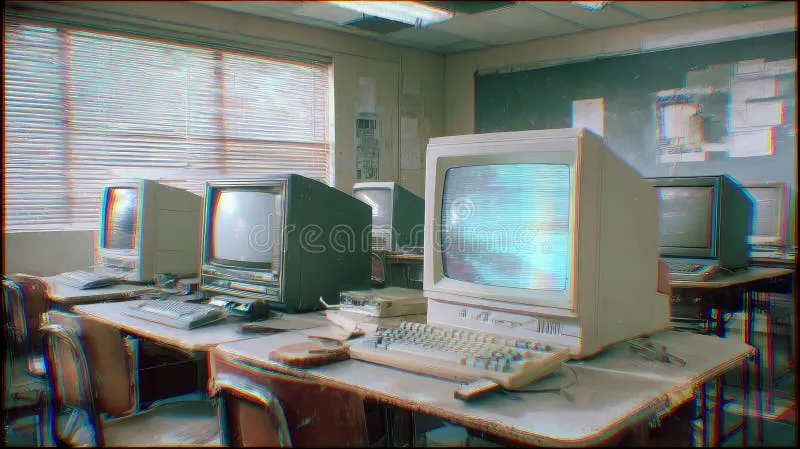
Photo: abandoned internet forum computer screen retro technology community, via thumbs.dreamstime.com
There was a time when logging onto the internet meant going somewhere specific. You had your spots — a horror fiction forum, a modding community for some half-forgotten PC game, maybe a regional tech board where the regulars knew your handle and called you out if you posted something dumb. These places had rules, personalities, and a sense of accumulated history you could scroll back through. They felt like neighborhoods.
Then came the aggregators. Then came Reddit. And somewhere in that transition, a lot of us lost the neighborhood and ended up in a shopping mall instead.
What Made Forum Culture Actually Work
Before we get into the autopsy, it's worth remembering what we're mourning. The classic internet forum — whether it was running on phpBB, vBulletin, or something even older — wasn't just a place to post. It was a system with real social architecture. Moderators were usually community members who'd earned trust over time. The rules were written by people who actually used the space. If you caused problems, a human being who cared about the community made a judgment call.
More importantly, the knowledge stayed. A thread from 2004 answering a specific question about a specific piece of hardware was still sitting there in 2011 when someone else needed it. The forum was a living archive, not just a feed.
BBS culture pushed this even further. Before the web, local bulletin board systems created hyper-specific community nodes — places where you might only have a few hundred users, but those users were invested. You knew the regulars. The sysop knew you. There was accountability baked into the structure.
Reddit's Promise and Its Long Compromise
Reddit sold itself as the internet's town square, and for a while, it sort of worked. Subreddits mimicked the structure of forums well enough that a lot of communities made the jump willingly. The discoverability was incredible — instead of hunting down a niche forum through a web search, you could just subscribe to a subreddit and be done with it.
But the cracks showed fast. Moderation became inconsistent and political. Vote manipulation warped visibility. The algorithm started favoring posts that generated heat over posts that generated insight. Communities that had spent years building genuine culture watched their subreddits get flooded with new users who hadn't absorbed any of it.
The 2023 API pricing crisis — which locked out third-party apps and sparked a wave of subreddit blackouts — was the moment a lot of longtime users finally admitted what they'd suspected for years: Reddit was never really their platform. It was a landlord situation the whole time.
The Discord Migration: Community Without Memory
After Reddit's implosion, Discord became the default fallback for a huge number of communities. And look — Discord is genuinely good at some things. Real-time conversation, voice channels, the ability to segment discussions into different rooms. For gaming communities especially, it filled a real gap.
But Discord has a fundamental problem that doesn't get talked about enough: it's not searchable in any meaningful way. Years of conversation in a Discord server are essentially lost to anyone who wasn't there in the moment. There's no archive. There's no thread that a new member can read to understand the community's history. You just drop in and try to catch up.
For the kind of deep, reference-heavy communities that thrived on forums — the ones where the value was in the accumulated knowledge as much as the live discussion — Discord is a step backward dressed up in a modern UI.
Where the Stubborn Ones Went
Not everyone followed the crowd. Across the internet, pockets of forum culture quietly survived or actively regrouped.
Some communities retreated to private or semi-private forums, accepting smaller audiences in exchange for higher signal-to-noise ratios. Hobby communities around amateur radio, vintage computing, certain genres of fiction writing, and niche sports kept their own boards running — sometimes on ancient software they were too attached to update.
Lemmy and the broader Fediverse have attracted a meaningful number of forum refugees looking for something that feels decentralized again. The federated model, where different instances can communicate but maintain their own rules and cultures, actually rhymes pretty well with the old BBS philosophy of local control. It's not mainstream, but it's growing, and the people using it tend to be exactly the type who remember what forums were supposed to feel like.
Kbin, Beehaw, and other ActivityPub-compatible platforms picked up noticeable traffic after the Reddit API drama. Whether they'll hold those users long-term is an open question, but the appetite is clearly there.
Can the BBS Spirit Actually Survive?
Here's the honest answer: it survives where people are willing to do the work. Moderation is labor. Maintaining a server costs money and time. Building community norms takes patience. The platforms that ate forum culture did so partly because they offloaded all of that friction — until the moment they didn't need to pretend to care anymore.
The communities that kept the old spirit alive are the ones where someone, usually unpaid and underappreciated, kept showing up. The sysops of the modern era are Discord mods, Lemmy instance admins, and the people still paying hosting bills for phpBB boards that get maybe 50 posts a month but have 20 years of history sitting in the database.
That's not nothing. That's actually everything the big platforms can't replicate — the sense that a place was built by people who give a damn about it specifically, not about scale.
If you've been bouncing between subreddits and Discord servers and feeling like something's missing, you're probably right. The thing that's missing isn't a feature. It's ownership. It's the feeling that the space belongs to the people in it.
Jack back in. The neighborhood is smaller than it used to be, but it's still out there.