Dial-Up Isn't Dead: The Surprising People Keeping BBS Culture Alive in 2024
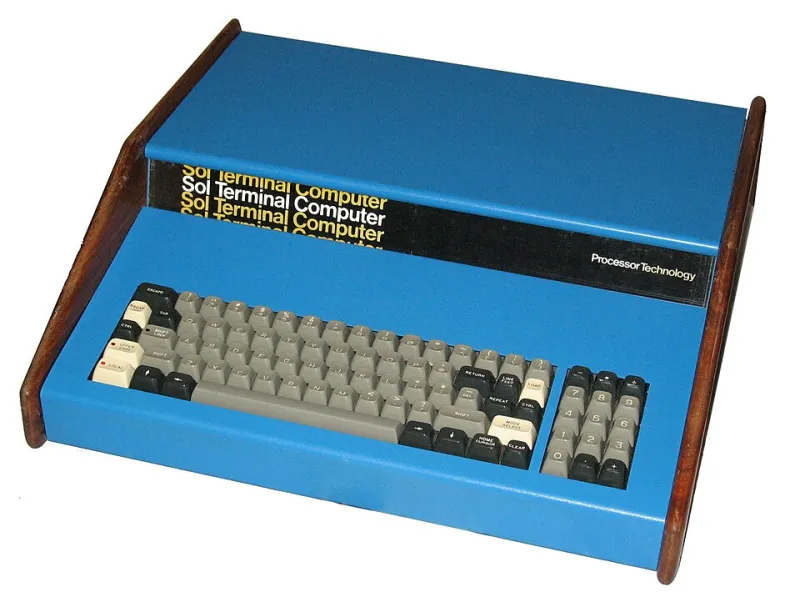
Photo: Swtpc6800 en:User:Swtpc6800 Michael Holley, Public domain, via Wikimedia Commons
If you told someone in 2005 that bulletin board systems would still be a going concern two decades later, they'd have laughed you out of the computer lab. BBS culture was supposed to be a historical footnote — a charming stepping stone between ham radio and the World Wide Web, something you'd mention at a trivia night and move on from. But here we are in the mid-2020s, and not only are functional BBS systems still running, some of them are genuinely growing.
Welcome to the retro internet renaissance nobody predicted.
The Numbers That Shouldn't Exist
Telnet BBS Guide, one of the longest-running directories of active bulletin board systems, currently lists over 600 active boards accessible via Telnet or SSH. That number has actually ticked upward over the past few years, not downward. Some of these systems have been running continuously since the early 1990s. Others are brand new, spun up by hobbyists who weren't even alive when the first BBS golden age was happening.
Legacy boards like Synchronet's main demonstration system, or the beloved Particles BBS out of the Pacific Northwest, are seeing upticks in new user registrations. For context, these aren't massive numbers — we're talking dozens of new accounts, not thousands. But in a community that was supposed to be extinct, even modest growth feels like a plot twist.
Sysops Still Standing
We reached out to a handful of active system operators — sysops, in the old parlance — to get a sense of what's driving the revival.
One sysop running a mid-sized board out of the Midwest (who asked to be identified only as "Threnody," his handle since 1993) said he never stopped running his system, even through the years when he'd go weeks without a new login. "I kept the lights on because it felt wrong to shut it down," he told us over email. "It was like a diner that stayed open even when nobody was coming in. And then, slowly, people started finding it again."
He attributes the renewed interest partly to YouTube. Channels dedicated to vintage computing and retro tech have introduced a generation of viewers to the aesthetic of ANSI art, scrolling text menus, and message bases organized by topic rather than algorithm. "Kids see those old screenshots and think it looks cool," Threnody said. "Which, honestly, it does."
Another sysop, who runs a newer board she launched in 2021, came at it from a completely different direction. She had no nostalgia for the original era — she was born in 1998. She set up her system after going down a rabbit hole of BBS history videos and deciding she wanted to experience it firsthand. "I couldn't find exactly what I was looking for, so I built it," she said. "That's kind of the BBS spirit anyway, right?"
Why Gen Z Is Showing Up
It might seem counterintuitive. Generation Z grew up with TikTok and Instagram, with infinite scroll and instant gratification. Why would anyone raised on broadband voluntarily embrace a text-based system where downloading a file might take a few minutes?
The answer, according to the people we talked to, is precisely because of that contrast.
There's a growing undercurrent of fatigue with the modern internet — its surveillance, its noise, its relentless optimization for engagement over meaning. BBS culture offers something almost radical by 2024 standards: a small community, a real identity (your handle), and conversations that actually go somewhere because the barrier to entry filters out the chaos.
"On a BBS, you read a message and you think about it before you reply," one newer user explained in a forum thread we stumbled across. "There's no like button. No algorithm deciding whether your post gets seen. It's just... words. And the people who wrote them."
That friction — the very thing that made BBS systems feel outdated — turns out to be a feature for a certain kind of user who's exhausted by the frictionless churn of social media.
Preserving the Digital Time Capsules
Beyond the active boards, there's a parallel preservation movement happening. Groups like the Textfiles.com archive, maintained by Jason Scott, have been cataloging the raw text files that circulated through BBS networks for decades. These documents — ranging from hacker manifestos to recipe swaps to early online fiction — represent a genuine piece of American cultural history that would otherwise vanish.
The Jason Scott Archive at the Internet Archive has digitized thousands of these files. Meanwhile, projects like the BBSDOC documentary and various YouTube deep-dives have helped contextualize the era for people who didn't live through it.
Some enthusiasts go even further, tracking down original hardware — Commodore 64s, old 286 PCs, actual external modems — and running period-accurate setups. It's the digital equivalent of restoring a vintage car, and the community around it is just as passionate.
The Slower Internet Is a Feature
There's something almost philosophical about the BBS revival, and it connects to broader conversations happening in tech culture right now. The early internet was slow, weird, and decentralized in a very literal sense — your local BBS was run by a neighbor, in their basement, on their own terms. The content wasn't moderated by a corporation in San Francisco. The community wasn't designed by a growth team.
That model had real limitations, obviously. But it also had something the modern web has largely lost: a sense of place. Your BBS was your neighborhood. You knew the regulars. The sysop knew you.
For a generation that grew up online but has never really felt at home online, that concept hits differently than you might expect.
If you've never logged into an active BBS, we'd genuinely encourage you to try. Fire up a Telnet client, point it at one of the boards listed in the Telnet BBS Guide, and just... explore. It'll feel slow. It'll feel strange. And somewhere in that strangeness, you might find something the modern internet forgot to keep.
Jack in. Log on. Remember when. That's not just a slogan around here — it's an invitation.