Saving the Glitch: The Archivists Hunting Down ANSI Art Before It Disappears Forever
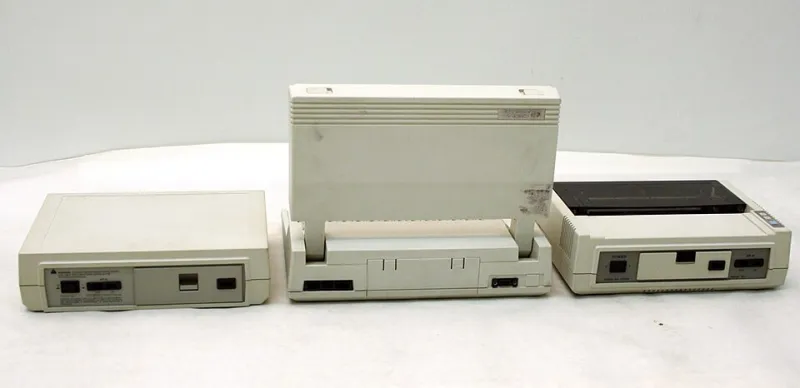
Photo: Hewlett-Packard (progettista/ costruttore), CC BY-SA 4.0, via Wikimedia Commons
Picture a canvas that's 80 characters wide and built entirely from the IBM PC character set. Your palette is 16 colors. Your brushes are block characters, line-drawing symbols, and a handful of special glyphs that look like smiley faces and card suits. Your audience will view your work through a terminal emulator, probably at 2400 baud, and they'll experience it loading line by line like a slow curtain rising.
This was ANSI art. And in the late 1980s and early 1990s, it was one of the most vibrant creative scenes on the American digital underground.
A Scene That Almost No One Talks About
If you ran a BBS back in the day — or even if you just called into one — you encountered ANSI art constantly. It was the wallpaper of the BBS world. Sysops used it to dress up their login screens, their menus, their message areas. Artists organized into groups with names like ACiD Productions, iCE Animations, and Mistigris, releasing monthly "artpacks" that circulated through the BBS network like underground zines.
At its peak, this was a genuine subculture with its own stars, its own drama, and its own aesthetic vocabulary. Artists developed recognizable styles. Certain groups had reputations. Getting recruited by ACiD was a legitimizing moment, the way getting signed to a respected indie label might feel to a musician.
And then the web happened, and almost all of it became invisible.
The Preservation Problem
ANSI files are not images in any format a modern browser or operating system knows how to handle natively. They're text files encoded with ANSI escape sequences — control codes that tell a terminal emulator to change colors, move the cursor, and draw characters in specific positions. To see them properly, you need software that speaks that language.
Without the right viewer, an ANSI file looks like a wall of garbled text with random characters sprinkled through it. The art is invisible unless you know how to look.
This creates a preservation challenge that goes beyond just finding old files. You have to maintain the context — the tools, the knowledge of how to use them, and ideally some understanding of the rendering differences between different terminal emulators of the era. An image that looks one way in a 1993 ANSI viewer might render slightly differently in a modern one, because the font metrics aren't identical.
"The files themselves are small and easy to store," explains one archivist who's been collecting scene files for over fifteen years and asked to be identified only by his handle, Phosphor. "The hard part is making sure people can actually experience them the way they were meant to be experienced. That context is what we're really trying to save."
Sixteen Colors and a Deadline
Phosphor got into collection the way a lot of people in this community did: he stumbled across an old artpack while cleaning out a hard drive backup and went down a rabbit hole. He's now sitting on tens of thousands of individual files, sourced from old artpack archives, personal collections donated by retired artists, and the occasional lucky find on eBay when someone sells a box of old floppies.
The community around preservation is small but organized. The Sixteen Colors archive (sixteencolors.net) has been one of the most important central repositories, hosting thousands of files with proper rendering tools built into the browser. Jason Scott's work at the Internet Archive has pulled in enormous quantities of old BBS content, including artpacks that would otherwise be gone. Groups like Blocktronics have kept the actual art scene alive, producing new ANSI work in the classic tradition and releasing packs that feel like direct descendants of the ACiD releases from thirty years ago.
"Blocktronics stuff is legitimately impressive," says another collector who goes by Fernwire. "They're working within the same constraints the old artists had, and they're doing things that would've blown people's minds in 1992. The form isn't dead. It's just underground again."
Tools for the Curious
If you want to get into viewing or creating ANSI and ASCII art, the barrier is lower than you might think. PabloDraw is a cross-platform editor that handles ANSI, ASCII, and several related formats, and it's been actively maintained. Moebius is another well-regarded option with a cleaner interface. For viewing files without editing them, ANSILove is a library that converts ANSI files to PNG images, which makes it easy to share art in contexts where a terminal emulator isn't practical.
On the ASCII side — which is distinct from ANSI in that it avoids the color control codes and works entirely in standard printable characters — tools like JavE and even plain text editors can get you started. ASCII art has a slightly broader contemporary footprint, partly because it works in any context where text is text, no special rendering required.
For deep dives into the history, the Artscene Research Project has documented the groups, the releases, and the drama in remarkable detail. It reads like a music scene history, complete with feuds, breakups, and legendary releases.
Why It Matters Beyond Nostalgia
It'd be easy to write off ANSI art as a curiosity — a clever workaround that creative people used before real graphics were possible, now obsolete and charming in a museum-piece kind of way. That framing misses something important.
ANSI and ASCII art represent a moment when technical constraints became an aesthetic. The limitation wasn't fought against — it was embraced, explored, and pushed to its absolute edge. Artists figured out shading techniques using block characters. They created the illusion of curves in a grid-based system. They developed animation using a format that was never designed for it.
That's the same creative energy that drives demoscene productions, that drives chiptune music, that drives any art form where the constraint is the point. Preserving ANSI art isn't just saving old files. It's saving evidence of what human creativity does when it can't rely on raw computational power to solve problems.
Phosphor puts it simply: "These were people making something beautiful out of almost nothing. That's worth remembering."
The archives are out there. The tools exist. And somewhere right now, someone is probably opening PabloDraw and laying down a title screen that would've looked right at home on a 1991 BBS login menu. The scene never really stopped. It just got quiet for a while.