Dead Formats, Real Value: Inside the Obsession With Floppy Disks and Forgotten Storage
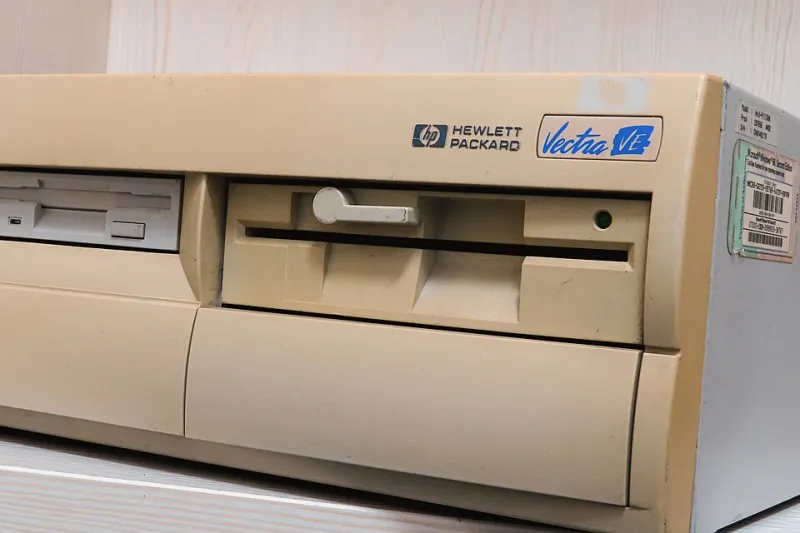
Photo: Chi Ho Chan from Hong Kong, CC BY 2.0, via Wikimedia Commons
Somewhere in a climate-controlled storage unit in suburban Ohio, there are roughly four thousand 5.25-inch floppy disks wrapped in anti-static sleeves and catalogued in a spreadsheet. The guy who owns them spent the better part of a decade tracking them down through estate sales, eBay auctions, and donations from people who were just about to throw them in the recycling bin. He has never once been called a hoarder to his face, but he's heard the word used behind his back.
He doesn't care. He knows something that most people don't: those disks are disappearing faster than anyone is counting, and what's on them may never exist anywhere else.
The Rot Nobody Talks About
Bit rot is an unglamorous problem with genuinely catastrophic implications. Magnetic storage media doesn't last forever — it degrades, sheds oxide, and eventually becomes unreadable. The timeline varies depending on storage conditions, but the general consensus among archivists is that most magnetic media has a practical lifespan somewhere between twenty and thirty years under decent conditions, and much shorter under bad ones.
Do the math on that. A floppy disk from 1985 is pushing forty years old. A lot of them are already gone. The ones that survive are often in attics, basements, and storage units where temperature and humidity have been doing quiet damage for decades. Every year that passes without someone imaging those disks is a year closer to permanent data loss.
This isn't a theoretical concern for the folks at places like the Internet Archive or the Computer History Museum. It's an active emergency. Volunteer-driven projects like the Software Preservation Network are working to digitize legacy media before it becomes physically unreadable, but they're racing a clock that doesn't care about their funding cycles.
The Collector Spectrum
Not everyone hoarding old storage media is doing it for archival reasons, and that's where the story gets more interesting.
On one end of the spectrum, you have the serious preservationists — museum curators, librarians, and dedicated volunteers who approach the work with genuine urgency. For them, a box of old floppies isn't a collectible, it's a primary source. Software that shipped on physical media in the 1980s often doesn't exist anywhere else. Business applications, games, educational titles, early desktop publishing tools — enormous swaths of computing history lived and died on formats that required specialized hardware to read.
In the middle, you've got the enthusiasts. These are the people who grew up with this stuff and never quite got over it. They're running vintage Macs and Amigas and Commodore 64s, and they need the media to use them. For them, collecting floppy disks is less about preservation and more about maintaining a living, working connection to the machines they love. The hardware isn't a display piece — it runs. The software isn't an artifact — it launches.
And then there's the investment crowd, which is newer and a little surprising. Sealed, mint-condition software in original packaging has started appreciating in ways that would have seemed absurd ten years ago. First-edition games from the early PC era, especially in complete-in-box condition, are selling for real money at auction. It's the same logic that turned vintage video games into a speculative market, now working its way back to even older formats.
The Privacy Angle Nobody Expected
Here's a thread that keeps showing up in collector forums and doesn't get much mainstream attention: some people are stockpiling legacy storage media specifically because it's immune to the surveillance infrastructure of modern computing.
A file on a floppy disk cannot be remotely wiped. It cannot be accessed through a cloud service's terms of service. It cannot be harvested by an app running in the background. It cannot be served with a silent legal demand that compels a company to hand over your data without notifying you. The disk sits on a shelf, and the data is exactly where you put it, readable only by someone with the right hardware and physical access to the object.
For a certain kind of privacy-minded person, that's not a limitation — it's the entire point. In a threat model where the risk is corporate or government access to digital files, a Zip disk in a fireproof box is genuinely more secure than anything stored in the cloud. It's a strange inversion: the obsolete format becomes the advanced security solution.
This isn't a mainstream position, and it probably shouldn't be taken as practical advice for most people. But the logic is sound enough that it keeps coming up, and it adds a layer to the collector community that goes beyond simple nostalgia.
The Hardware Problem
Collecting the media is only half the battle. The other half is finding hardware that can actually read it.
This is where things get genuinely complicated. Floppy drives capable of reading 5.25-inch disks haven't been manufactured in meaningful quantities for decades. The ones that exist are aging, and the components needed to repair them are increasingly scarce. Specialized devices like the Kryoflux — a USB-based controller that can read a wide range of legacy magnetic formats — have become essential tools for serious archivists, but they require technical knowledge to use well.
For collectors running vintage machines, sourcing working drives is a constant challenge. eBay remains the primary marketplace, but working units command real premiums now, and the supply is finite by definition. Every drive that fails and gets thrown out is one fewer option for the people who need them.
Communities on forums and subreddits dedicated to vintage computing have developed informal networks for sourcing parts, sharing repair knowledge, and coordinating preservation efforts. It's grassroots infrastructure built out of necessity, and it works surprisingly well — until it doesn't, and something irreplaceable is lost.
Why It Matters
There's a version of this story that's easy to dismiss as grown adults being sentimental about plastic squares. That version misses the point entirely.
The software and data stored on legacy media is part of the historical record of how computing developed in America. The games, the business tools, the personal documents, the early digital art — these things tell a story about how ordinary people adopted and adapted to technology that changed everything. Losing that record because nobody bothered to image the disks before they degraded would be, in the most literal sense, a cultural loss.
The people doing this work — the archivists, the collectors, the enthusiasts running ancient hardware in spare bedrooms — are doing something genuinely valuable, even when it looks from the outside like an eccentric hobby. They're the ones keeping the record intact.
The disk spins. The data reads. For now.