Still on the Modem: The Americans Broadband Left Behind

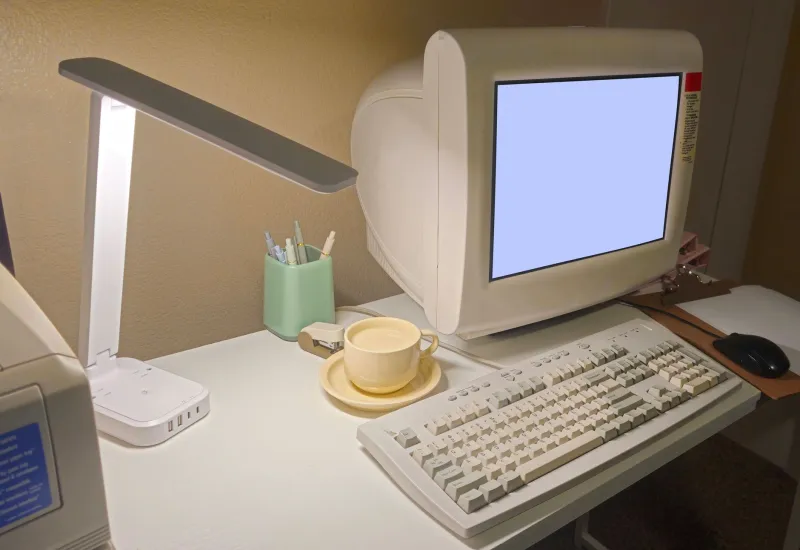
Photo by Photo by Bradley Gossett on Unsplash on Unsplash
There's a particular kind of patience that comes with waiting for a webpage to load at 56K. You hit enter, you walk away, you come back. Maybe it's there. Maybe it timed out. Either way, you've already accepted the deal. For most of us, that experience lives somewhere between a punchline and a fond memory — the soundtrack of a slower internet era we graduated out of sometime around the mid-2000s.
For a surprising number of Americans, though, that wait never ended.
The Map That Doesn't Add Up
According to the FCC's own reporting, somewhere between 14 and 21 million Americans still lack access to broadband internet — and those are the optimistic numbers. Independent researchers and advocacy groups like BroadbandNow have repeatedly argued the actual figure is closer to 42 million, pointing out that the FCC's methodology has historically overstated coverage by marking an entire census block as "served" if even a single address in that block can receive broadband.
Translate that into real life and you get counties in rural Appalachia, stretches of the Great Plains, pockets of the rural South, and remote corners of the Mountain West where the fastest available connection still comes through a copper phone line. Dial-up. The same technology that was already considered outdated when The Matrix came out.
It's not that these places were skipped over by accident. In many cases, the math just never worked for private carriers. Running fiber or even cable infrastructure to a farm forty miles from the nearest town costs real money, and a sparse customer base doesn't return that investment fast enough for a publicly traded telecom company to care. So the lines never got laid. The towers never went up. And the residents made do.
Life at 56K in 2024
Spend any time on rural community forums — the ones that still exist on old-school message boards, fittingly enough — and you'll find people who have built surprisingly functional lives around terrible connection speeds. Email works fine. Basic text browsing works, if you disable images by default. Government forms, banking, even some remote work is possible with enough patience and the right tools.
A small business owner in eastern Kentucky described her workflow in a community thread a while back: she drafts everything offline, queues her uploads overnight, and checks responses in the morning. "It's just how the day works," she wrote. "I don't think about it as a limitation anymore. It's a schedule."
That kind of adaptation isn't resignation — it's problem-solving under constraint. And honestly, it's not entirely different from the mindset that built BBS culture in the first place. You worked with what the line gave you. You got creative. You didn't wait around for the infrastructure to catch up.
But there's a hard ceiling on that creativity when your kids need to do homework that requires streaming video, when a telehealth appointment drops every three minutes, or when a job posting requires uploading a resume to a site that won't load.
The Policy Carousel
The federal government has thrown significant money at this problem — or at least claimed to. The 2021 Infrastructure Investment and Jobs Act included $65 billion specifically earmarked for broadband expansion, with a heavy emphasis on reaching unserved and underserved communities. The FCC's Affordable Connectivity Program tried to chip away at the cost side of the equation. State-level programs have added more funding on top.
And yet, the dial-up households persist.
Part of the problem is bureaucratic lag. Grant programs move slowly, require extensive applications, and often favor larger carriers who have the staff to navigate the paperwork. Part of it is the same faulty coverage data — if the FCC thinks a community is already served, it doesn't qualify for the funding meant to reach unserved areas. Part of it is that some of the money allocated in previous rounds never actually produced working infrastructure.
A 2022 investigation by the Institute for Local Self-Reliance found that several telecom companies had accepted federal subsidies to expand rural broadband and then either built substandard networks, missed deployment deadlines, or simply didn't follow through. The accountability mechanisms were weak. The money was gone. The residents were still on dial-up.
The Workarounds People Actually Use
Where government and private carriers have failed, residents have improvised. Some communities have pooled resources to build cooperative broadband networks — locally owned, community-operated, the ISP equivalent of a rural electric co-op. These projects move slowly and require a lot of volunteer coordination, but a handful have actually succeeded in delivering real broadband to areas the big carriers ignored.
Others have leaned on satellite internet, which has improved dramatically with the arrival of low-earth-orbit options like Starlink. For many rural households, a Starlink dish has been genuinely transformative — actual broadband speeds, no phone line required. The catch is cost. The hardware and monthly fees put it out of reach for lower-income households, and the subsidy programs designed to help have had their own funding and eligibility complications.
And then there are the people who have simply made peace with the phone line. They've optimized their browsers, learned which sites are worth loading and which aren't, built their digital lives around the constraints. It's not ideal. But it works, in the way that a lot of things work in rural America — through stubbornness and ingenuity rather than infrastructure.
What the Dial-Up Holdouts Understand
Here at NDS BBS, we spend a lot of time thinking about slow internet as a choice — a deliberate return to a different pace of digital life. And there's real value in that framing. But it's worth sitting with the fact that for a meaningful chunk of the country, slowness was never optional.
The communities still tethered to analog lines didn't choose the aesthetic. They got left out of a buildout that the rest of the country took for granted. And they've been waiting — through multiple administrations, multiple rounds of federal funding, multiple promises — for an infrastructure upgrade that keeps getting deferred.
The patience required to use dial-up internet in 2024 isn't quaint. It's a measure of how far the gap between rural and urban America has been allowed to stretch. The modem screech that sounds like nostalgia to some of us is just Tuesday to someone else.
The line is still open. The question is whether anyone on the other end is listening.