Fifty-Nine Numbers, One Weekend: What I Learned Dialing Every Live BBS in America
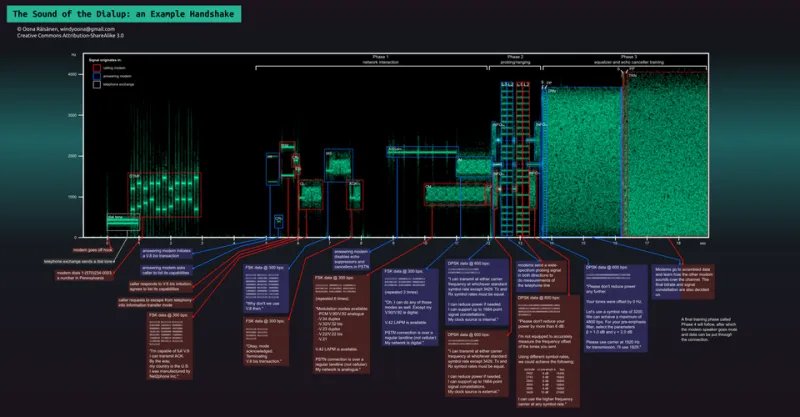
Photo: Oona Räisänen (User:Mysid), CC BY-SA 3.0, via Wikimedia Commons
I want to tell you the modem connected on the first try. It didn't. The first number I dialed, Friday around 7 p.m., rang six times and picked up with a fax screech that I can only describe as hostile. The second number was busy. The third connected, dropped, and connected again before settling into the handshake — that long, warbling negotiation that I hadn't heard in twenty years and recognized the way you recognize a childhood phone number.
Connected at 14.4. Good enough.
The List
There are websites that keep lists of active BBSes — the Telnet BBS Guide, various enthusiast wikis — and as of this writing, the number of boards still answering in the United States is somewhere north of a hundred, depending on how strict you are about "active." I filtered for boards with dial-up numbers, cross-referenced a couple of community threads, and came up with 59 numbers across 21 states. I put my phone on do not disturb, dug a US Robotics Sportster out of a box in the garage, and got to work.
The plan was simple: dial everything, log what answered, stay long enough to read the logon screen, and move on. It was not a scientific survey. It was a pilgrimage.
What Answers the Phone
By Saturday afternoon I had a pattern. Roughly a third of the numbers were dead — no answer, or a disconnected recording, or in one memorable case a confused man in Ohio who has every right to be annoyed with me. Another third were busy, which honestly felt correct; some things should require persistence.
The final third connected. And here is where it gets good.
Every live board answered with a greeting, and every greeting was a small act of self-expression. One opened with full-color ANSI art of a dragon and a scrolling marquee that read WELCOME HOME. One was a single line of plain text: "You are caller 41,307. Be nice." A board in Oregon greeted me with the weather. A board in Georgia made me read a rules file that was longer than most terms-of-service agreements and included, as rule number one, "Don't make me regret keeping the line open."
I didn't. I stayed an hour on that one.
The People on the Other End
Here's what I couldn't shake all weekend: every single one of these connections is a choice someone is still making. A sysop is paying for a phone line — a real phone line, in some cases a dedicated one — so that a stranger can dial in and read a message board that maybe three other people visited this week. There's no revenue model. There's no growth strategy. There's a person who decided a thing should keep existing, and then kept it existing.
I left messages on a dozen boards. By Sunday night, two had replies. One was a sysop correcting a detail in my post about a game high score. The other just said, "Glad the number still works. Come back anytime."
Come back anytime. When is the last time a website said that to you?
A Eulogy That Isn't One
I went into the weekend expecting to write a eulogy, and I came out of it writing about a going concern instead. Yes, the numbers are dwindling. Yes, the median sysop is not getting younger, and there's no obvious pipeline of people replacing that second phone line in the den. But the boards that answered did so with the confidence of things that intend to keep answering.
Somewhere in America right now, a modem is screeching through a handshake, a caller is reading a logon screen, and a sysop is glancing at the connection log on their way to bed, mildly pleased that somebody called. If you've got an old modem in a closet and a spare evening, the list is out there. Dial a few.
Be nice. Don't make them regret keeping the line open.