Nobody Said 'Username' in 1985: A Brief Elegy for the Handle
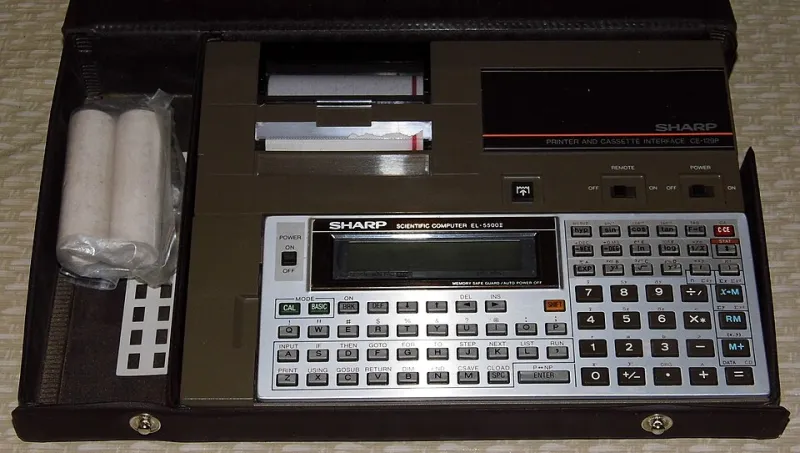
Photo: Joe Haupt from USA, CC BY-SA 2.0, via Wikimedia Commons
Say the word 'login' out loud sometime. Notice that nobody blinks. It's a word we use at work, at the bank, on our televisions. It is so thoroughly assimilated that we've forgotten it was ever strange—a compound verb coined by people who had to do something to get onto a computer, and wanted a word that described the effort.
But 'login' is just the most successful colonist from a whole civilization of vocabulary that grew up on bulletin board systems, and I'd argue we've been spending down that inheritance ever since without replenishing it.
A Language Built for a Place
The BBS lexicon wasn't jargon for jargon's sake. It described a real social geography. You logged in because logging in was an event—you were entering somewhere. You had a handle, not a username, and the distinction mattered: a handle was chosen, performative, the name you went by in a scene, closer to a CB radio handle or a DJ name than to a form field.
The sysop ran the place, and everyone knew their name because they were a person, reachable, occasionally a friend's parent. A luser was what you became when you earned it—the term was affectionate, mostly, a small-town insult you'd take from the guy at the hardware store. And RTFM was the whole community's parenting philosophy in four letters: figure it out, the documentation exists, come back when you've tried.
Every one of these words assumed something we've since lost: that the online world was a place with doors, locals, and manners.
The Great Sanding Down
Now look at what happened. 'Handle' became 'username,' which became 'profile.' The sysop became the 'community manager,' an employee. 'Luser' got retired—fair enough—but so did the entire concept of earning or losing standing within a bounded community. RTFM became... well, have you tried asking a question in a large Discord lately?
Here's my thesis, and I'll defend it at the family dinner table: today's username culture is the BBS handle scene wearing a corporate lanyard. Your gamertag is a handle. Your Discord name is a handle. The instinct that drives a fourteen-year-old to spend an hour choosing between two spellings of a name—that's the same instinct that drove a kid in Dayton to be 'ShadowKnight' on three different boards in 1991. The impulse survived. The context didn't.
Because a handle meant something only inside a specific community. 'ShadowKnight' on the Cleveland boards might be completely unknown in Dallas, and that was fine—that was the point. Handles were local reputations, built through presence. A profile is the opposite: portable, permanent, searchable, attached to you like a tax ID. Your handle could be a mask you wore among friends. Your profile is a dossier you maintain for strangers.
What We Actually Lost
I'm not here to pretend the BBS era was some golden age—half the vocabulary was gatekeeping, and 'luser' was doing a lot of heavy lifting for people who didn't want newcomers around. Nostalgia with blinders on is just branding.
But there's a real loss hiding in the word swap. When you log in now, you don't go anywhere. You authenticate. The modern vocabulary is the vocabulary of security and commerce: credentials, verification, accounts. The BBS vocabulary was the vocabulary of arrival and belonging. Those are different relationships to a network, and the words we chose reflect it.
There's a small resistance underway, of course. The federated networks and hobbyist boards getting rebuilt by the people profiled on this very site tend to reach for the old words—handle, login, even the occasional sysop. Partly it's cosplay. Partly it's a genuine bet that vocabulary shapes behavior, that a place with doors and locals will treat its people differently than a platform with accounts and users.
I think the bet is right. Words are load-bearing. Call people users and you'll build things that treat them like usage. Call them by their handles and maybe, occasionally, you build a place worth logging into.
The dragon at the end of this editorial: I wrote my first handle on a BBS in 1989 and I still answer to it faster than to my legal name. Draw your own conclusions. RTFM.