Lag On Purpose: The Retro Gamers Who Swapped Fiber for Friction
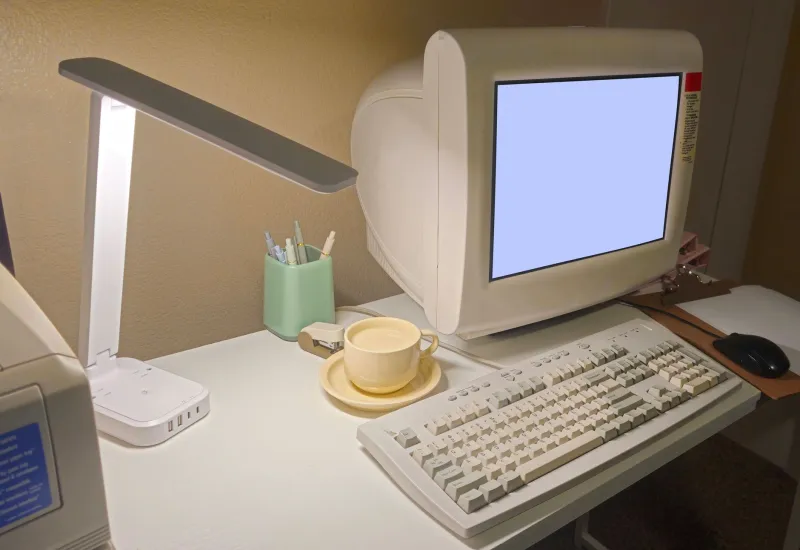
Somewhere in suburban Ohio, a guy named Marcus is booting up Quake II on a machine he pulled out of a storage unit in 2021. His fiber router is sitting right there on the desk—dark, ignored. Instead, he's routing through a software emulator that mimics a 56K modem connection, complete with the handshake noise he programmed in himself. He's about to join a server populated by maybe eight other people doing the exact same thing.
"The first time I played Quake II online as a kid, I was on a 28.8 connection in my parents' basement," Marcus told us over email. "I died constantly. I hated it and loved it at the same time. Fiber just doesn't feel like that. It feels like something else entirely."
This is the part where you'd expect us to call it nostalgia and move on. But what's happening in these corners of the retro gaming community is more interesting than simple longing for the past. It's a deliberate, almost philosophical rejection of what modern online gaming has become—and a weird kind of argument that friction, delay, and imperfection were never bugs. They were the whole point.
When Latency Was the Level Design
If you played online multiplayer in the late 1990s or early 2000s, you remember what lag actually felt like. Not the sanitized, sub-20ms experience of a modern fiber connection, but the genuine chaos of watching your character teleport three feet to the left because the packets finally caught up. You learned to lead your shots. You learned to predict where an opponent was going to be rather than where they appeared to be. You developed a feel for the network itself as a kind of terrain.
That's not a romantic reframing. It was a legitimate skill set. Old-school Counter-Strike players who grew up on dial-up connections developed timing instincts that players on broadband simply didn't have to cultivate. The latency wasn't just an obstacle—it shaped how the game was played at a fundamental level.
Modern competitive gaming has spent twenty years engineering all of that out of existence. Dedicated server farms, rollback netcode, regional matchmaking, client-side prediction algorithms—the industry has thrown enormous resources at making online play feel as close to local as possible. And for competitive esports, that makes complete sense. But for a segment of players who grew up in the dial-up era, something got lost in the optimization.
The Throttle Crowd
The community doing this isn't huge, but it's organized. There are Discord servers—yes, the irony is noted—dedicated to coordinating "authentic latency" game nights. Some players use software tools like Clumsy on Windows or tc netem on Linux to artificially introduce packet delay, jitter, and occasional loss. Others go further, digging out actual dial-up modems and finding the dwindling number of ISPs that still offer analog connections, mostly in rural areas.
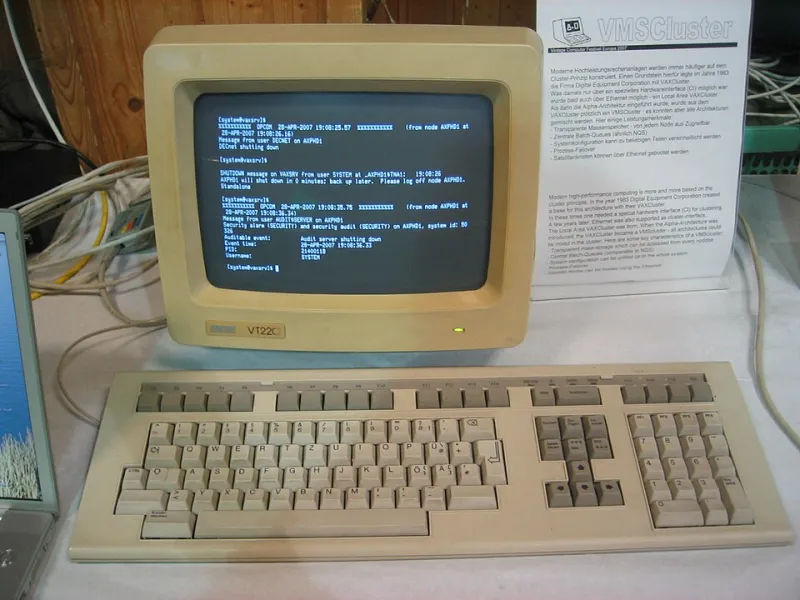
A few have gone the hardware route entirely: vintage PCs running period-correct operating systems, connected through actual telephone lines to dial-up aggregators that still exist specifically to serve this kind of enthusiast. The setup is fussy, temperamental, and completely impractical. That's kind of the point.
The games these communities gravitate toward are telling. Quake and Quake II, StarCraft: Brood War, early Ultima Online, Diablo over Battle.net, original Age of Empires II. Games that were designed in an era when the network was assumed to be unreliable. Games that built their mechanics around the reality of variable connection quality rather than pretending it didn't exist.
What Modern Gaming Smoothed Over
There's a broader cultural argument lurking underneath the technical one. Modern gaming—especially online multiplayer—has been aggressively optimized for accessibility and retention. Matchmaking systems pair you with players at your exact skill level. Tutorials hold your hand. Ranked modes protect new players from getting stomped. The rough edges have been sanded down until the experience is comfortable, predictable, and frankly a little sterile.
The dial-up crowd would tell you that getting absolutely wrecked on a laggy Quake server by someone who'd been playing since 1997 was actually a formative experience. You either got better or you didn't. The server didn't care. The other players didn't care. You were just a new node on a chaotic network, and the network had no obligation to make you feel good about yourself.
That sounds brutal, and it was. But there's something about that brutality that a lot of players apparently miss. The communities around these retro multiplayer setups describe them as more social, more human, and paradoxically more fair than modern matchmaking—because everyone is operating under the same terrible conditions. When everyone has 200ms of ping, the playing field levels out in its own weird way.
The Authenticity Question
Not everyone in the retro gaming community is buying it. There's a real debate about whether artificially introduced lag is actually the same thing as the organic chaos of a real 1998 dial-up connection. The argument goes that the feeling of lag isn't just about the numbers—it's about the entire context. The knowledge that your connection could drop at any moment. The sound of the modem negotiating. The way your parents might pick up the phone in the next room and kill your session entirely.
Software emulation can reproduce the delay, but it can't reproduce the precarity. And maybe that precarity was actually load-bearing.
Some players try to address this by running their sessions on hardware that could genuinely fail—old modems, old phone lines, old machines. The instability isn't simulated; it's real. When the connection drops mid-match, it's because the connection actually dropped. There's a purity to that, even if it's also deeply inconvenient.
Friction as Feature
What the dial-up gaming revival is really about, underneath all the technical detail, is a pushback against the idea that removing friction is always an improvement. Modern game design assumes that any obstacle between the player and the experience is a problem to be solved. The dial-up crowd thinks that assumption is wrong—or at least, that it's not universally true.
There's a reason people still play chess on physical boards instead of apps that can analyze every move in real time. There's a reason vinyl records have had a genuine commercial comeback. The resistance, the imperfection, the requirement to be present with the limitations of the medium—those things aren't bugs in the experience. For some people, they're the experience.
Marcus in Ohio would probably agree. Last time we checked in, he'd just gotten stomped on a Quake II server for forty-five minutes straight. He said it was the most fun he'd had gaming in years.
Some connections are worth the wait. Even the slow ones.