Still Connected: The IRC Channels That Have Been Running Longer Than Most Social Networks Have Existed
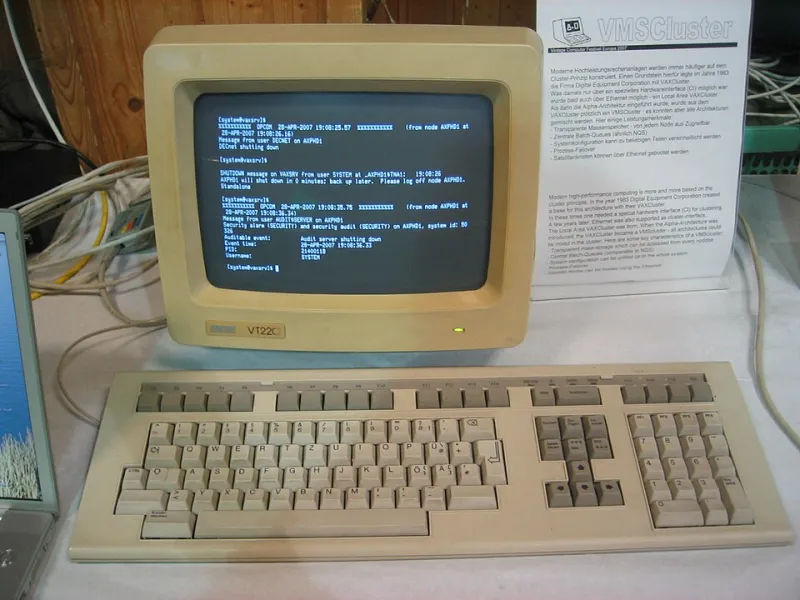
Photo: Gürkan Sengün, CC BY-SA 3.0, via Wikimedia Commons
There's a channel on EFnet that has been active, without meaningful interruption, since 1994. Not archived. Not reconstructed. Running. People log in, say things, argue about things, help each other with things. The channel topic gets updated. The bots do their jobs. The regulars show up.
Facebook launched in 2004. Twitter in 2006. Discord in 2015. All of them are younger than rooms that are still open right now on IRC networks that most people under thirty have never heard of.
This isn't a nostalgia piece, exactly. It's more of an investigation into something genuinely strange: why did these particular communities survive when almost everything around them collapsed, consolidated, or got acquired? And what does their survival say about what we keep getting wrong when we build new places for people to talk to each other?
What a Netsplit Actually Felt Like
If you were on IRC in the 1990s, you remember netsplits. A server would disconnect from the network, and suddenly half the channel would vanish — a wall of quit messages scrolling past, the room cut in half. Then, minutes later, they'd all flood back in with a cascade of join messages and the channel would reconstitute itself. It was disorienting and weirdly intimate. You learned who was on which server. You learned the topology of the network from the inside.
Netsplits were a feature, in a strange way. They made the infrastructure visible. IRC never pretended to be seamless. The seams were right there in the chat window, and the community adapted around them. You developed a kind of resilience — a shared understanding that the connection might hiccup, that the room might fragment temporarily, but that it would come back together.
That resilience, it turns out, might be part of why some of these communities are still here.
The Operators Who Kept the Lights On
Every long-running IRC channel has at least one person who just never left. Not out of inertia — out of genuine commitment to the room as a place. These are the channel operators (ops) who updated the topic when something important happened, who kept the bots running when the hosting changed, who mentored new users when the regulars had moved on to other parts of their lives.
Speak to enough of these people and a pattern emerges. They don't describe what they do as maintaining a technology. They describe it as tending a community. The distinction matters. Technology gets replaced. Communities, if they're healthy, find ways to persist through the replacements.
Many of these operators have watched the same core group of people migrate through jobs, cities, marriages, and kids over the course of two or three decades — all while the channel stayed open. The IRC room became a kind of fixed point. Everything else in life moved; the channel was always there when you opened the client.
What IRC Got Right (That Nobody Else Has Fully Copied)
The features that made IRC feel limited at the time look different in retrospect. No algorithmic feed. No engagement metrics. No notification badges designed to manufacture urgency. You either saw the conversation or you didn't — and if you missed it, it was gone, which meant you came back because you wanted to, not because an app was nudging you.
The lack of persistent message history was a feature that felt like a bug. It meant conversations were present-tense. You weren't scrolling through weeks of context; you were joining a room mid-conversation and either catching up or starting fresh. This forced a certain social agility. Long-running IRC communities developed their own institutional memory — regulars who could brief newcomers, channel bots that stored FAQs, topic lines that signaled current mood or ongoing discussions.
There was also something important about the absence of profiles. On IRC, you were your nick and your words. You didn't have a follower count or a profile picture or a list of your interests. You had a history of showing up and being yourself in a room full of people who'd also been showing up. Reputation was entirely behavioral, built over time, and couldn't be gamed by posting a good selfie.
The Discord Question
It's worth asking honestly: did Discord solve the IRC problem? The answer is mostly no, for reasons that are worth thinking through.
Discord solved the onboarding problem. Getting someone into an IRC channel in 2024 requires explaining what an IRC client is, which network to connect to, which port to use, and how to register a nick. Discord is a download and a link. That's a real difference, and it matters for community growth.
But Discord is a platform, which means it's subject to platform logic. Servers get deplatformed. Terms of service change. The company can sunset features, alter the interface, or get acquired. The communities that live there are tenants, not owners. The long-running IRC communities, by contrast, exist on infrastructure that nobody is incentivized to shut down. The overhead is low enough that a dedicated operator can keep a server running for years on minimal resources.
The deeper difference is ownership of the culture. IRC communities built their own norms from scratch, enforced them with their own tools, and iterated on them over years without a platform deciding what was acceptable. That autonomy produced communities with genuine, distinctive personalities — rooms that felt like specific places rather than instances of a template.
The People Still Logging In
Ask the regulars in these long-running channels why they're still there, and the answers are disarmingly simple. It's where their people are. It's quiet. Nobody's trying to sell them anything. The conversation is good.
That last one comes up a lot. The conversation is good. Not viral, not trending, not optimized for engagement — just good. The kind of conversation that happens when the same group of people has been talking to each other long enough to skip the small talk, share context without explaining it, and disagree without it becoming an event.
There are channels where the same arguments have been running, in some form, for fifteen years. Not because nobody resolved anything, but because the argument is actually a tradition — a ritual that newcomers eventually recognize and join, a way of establishing that you understand the room.
That's not something you can replicate by launching a new server and inviting your contacts. It accumulates. It takes time and continuity and people who keep showing up even when the platform feels old and the client looks dated and everybody keeps asking why you're not just using Discord.
The answer is the same one it's always been: because this is where we are. Log on and you'll see.