Thirty-Five Years of Uptime: One BBS Is Finally Pulling the Plug
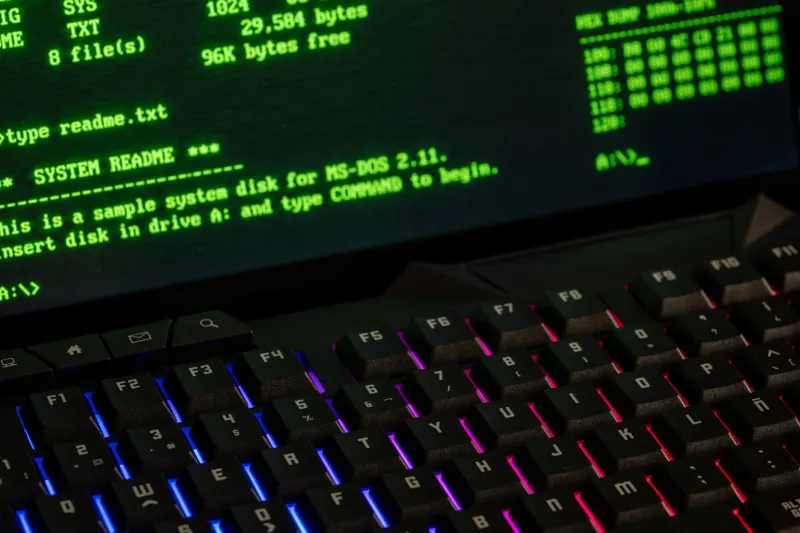
There's a login prompt that has greeted users somewhere in Ohio since 1989. It's not fancy. It never was. A blinking cursor, a system name rendered in ASCII, and a password field that has accepted thousands of credentials from hundreds of users across three and a half decades. Sometime before the end of this year, that prompt will stop answering.
The sysop — who asked to be identified only by his longtime handle, Greystone — is 67 years old. He set up the system on a 286 machine in his spare bedroom when his kids were still in elementary school. Those kids are now in their forties. The 286 is long gone, replaced over the years by a succession of increasingly capable hardware, but the board itself — its message threads, its file libraries, its user database — has rolled forward continuously through all of it. No major outages. No forced migrations. Just uptime, year after year, paid for out of pocket and maintained on weekends.
"I never thought about stopping," Greystone told us over email, the irony of the medium not lost on either of us. "It was just something I did. Like mowing the lawn. You just kept doing it."
Now he's done.
What a BBS Actually Is, For Anyone Who Forgot
For the uninitiated, a bulletin board system is the direct ancestor of every online forum, subreddit, and Discord server you've ever used. Before the web made the internet visual and before social platforms made it frictionless, BBSes were where people gathered online. You dialed in with a modem, connected directly to someone else's computer, and participated in message threads, file sharing, and real-time chat. Each system had its own personality, shaped almost entirely by the person running it.
At their peak in the early 1990s, there were tens of thousands of BBSes operating across the country. Most vanished when AOL and the web arrived and made the whole thing feel quaint. A stubborn few survived. Greystone's board is one of the longest continuously operating independent systems in the United States — possibly the longest, depending on how you define "independent" and "continuously."
That distinction matters more than it might sound like it does.
The Community That Lived Inside It
Regular users of the board — some of whom have been logging in for over two decades — describe it less like a website and more like a neighborhood bar that happened to exist inside a phone line. There are inside jokes that stretch back to the Clinton administration. There are feuds that were resolved and friendships that outlasted marriages. One user, who goes by Packet_Sal, met his business partner through the board's regional networking subforum in 1997. They've been running an IT consulting firm together ever since.
"It sounds corny, but that place changed my life," Sal said. "And I don't think I'm the only one who can say that."
The board has roughly 340 active user accounts — "active" being loosely defined as anyone who's logged in within the last five years. That's a small number by any modern metric, but the depth of engagement is something platforms with millions of users rarely achieve. Threads on the board regularly run to hundreds of replies. Some ongoing conversations have been going for longer than TikTok has existed as a company.
When Greystone announced the shutdown in a pinned post last spring, the response was immediate and emotional. Users who hadn't logged in for years came back to say goodbye. Old handles resurfaced. Someone dug up a message thread from 1994 and reposted it in full. For about two weeks, activity spiked to levels the board hadn't seen since the late nineties.
Then it settled back into its usual rhythm, because the board was still there, and habits are hard to break.
The Preservation Problem Nobody Wants to Solve
Here's where the story gets genuinely uncomfortable. Greystone's board contains thousands of message threads spanning 35 years. It contains file libraries with software, text files, and artwork that exists nowhere else. It contains a record of how a specific community of mostly Midwestern tech enthusiasts talked to each other, argued with each other, and helped each other through decades of change — personal, professional, and technological.
None of it is being preserved in any formal way.
The Internet Archive has not been contacted. No university digital humanities department has expressed interest. The Library of Congress, which has made efforts to archive Twitter and other platforms, has no program for independently operated BBSes. When Greystone pulls the plug, everything on that system will exist only in whatever personal backups individual users have thought to make.
"I asked around," Greystone said. "Nobody's coming. I don't have the energy to figure it out myself at this point. Maybe someone can mirror the files section. I don't know."
A few users have taken matters into their own hands. One, who goes by Archon_77, has been systematically copying message threads into plain text files and uploading them to a personal web server. It's a manual process. It's incomplete. It's also the closest thing to an institutional preservation effort that currently exists for this system.
This is not an isolated problem. Across the country, the handful of BBSes that survived into the 2020s are aging out alongside their operators. The people who built these systems are retiring, getting sick, or simply running out of the particular kind of stubbornness required to keep legacy infrastructure alive indefinitely. When they stop, the communities they hosted don't migrate cleanly to Discord or Reddit. They scatter. The history stays behind on hardware that eventually gets wiped or thrown away.
What the Lights Going Out Actually Means
There's a version of this story where Greystone is just a guy who ran a hobby project for a long time and decided to stop. That version is true. He's allowed to be tired. He owes nobody 35 more years of unpaid labor.
But there's another version where what's happening here is a small, quiet cultural loss that nobody with institutional power has decided is worth preventing. Digital communities built on independent infrastructure don't have the same safety nets as physical historical sites or even commercial platforms, which at least generate enough revenue to make their archives worth fighting over in bankruptcy court. A BBS run by a retired guy in Ohio generates nothing. Its history is worth everything to the people who made it and nothing to anyone with a budget.
The board's final date hasn't been set yet. Greystone says he'll give users at least 60 days notice before the last shutdown. He's planning to post one final message himself — something he's apparently been drafting and deleting for months.
"I don't know what to say," he admitted. "Everything I write sounds either too dramatic or not dramatic enough. Maybe I'll just say goodnight and leave it at that."
Somewhere in Ohio, a cursor is still blinking. For now.